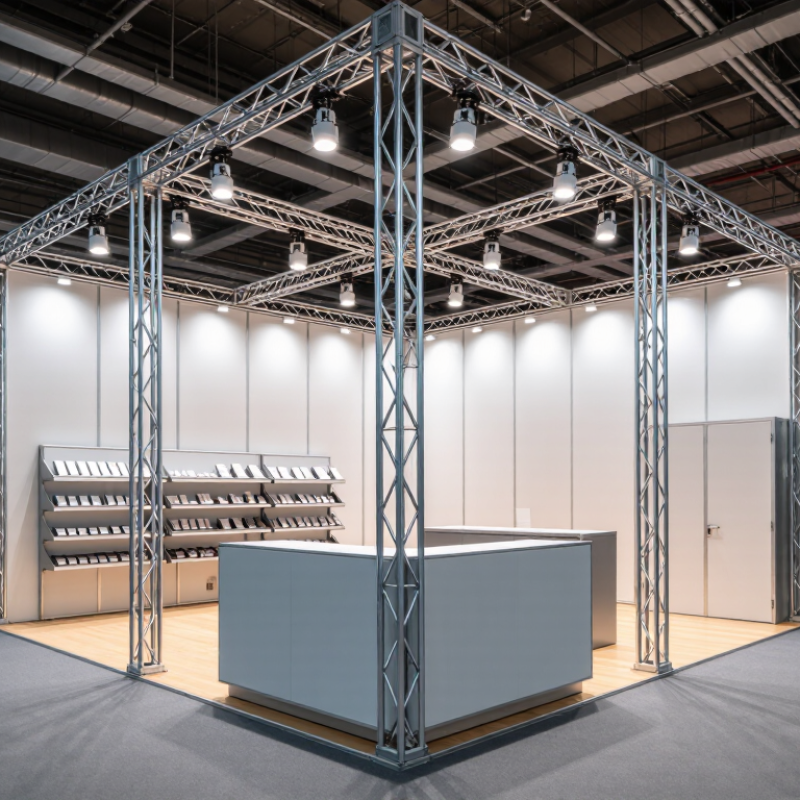
A Modular Trade Show Booth is a flexible exhibit system built from reusable frames, panels, graphics, lighting, and display accessories. Unlike a custom booth, it can be reconfigured for different floor spaces and event goals. A 10-by-20-foot layout might include a fabric back wall, a lockable counter, two product shelves, and overhead lighting. These details affect how visitors move, pause, and engage with your team.
In practical exhibit work, modular systems help brands reduce repeated construction and simplify transport. Lightweight aluminum frames often pack into cases, while stretch fabric graphics can be replaced when campaigns change. The result is a more adaptable presence across regional shows, conferences, and product demonstrations. However, flexibility does not guarantee impact. Poor planning can create empty corners, weak sightlines, or graphics that disappear under harsh hall lighting.
A successful Modular Trade Show Booth begins with measurable objectives. Consider lead volume, product visibility, meeting privacy, storage needs, and installation time. Experienced exhibitors also review venue rules, ceiling limits, electrical access, and shipping procedures before approving a design. Small oversights can become expensive on the show floor. It is not a universal solution. Some brands need complex structures, suspended signs, or highly immersive environments. That trade-off deserves attention. By comparing portability, durability, appearance, and long-term value, marketing teams can choose a booth that supports real business conversations rather than simply filling floor space.
A modular trade show booth is an exhibit system built from reusable, interchangeable components. These parts may include aluminum frames, fabric graphics, counters, shelves, lighting, and storage units. Instead of constructing a new booth for every event, exhibitors reconfigure the same elements for different floor spaces. This approach can reduce setup time, shipping volume, and material waste.
Flexibility is the central feature. A 10-by-10-foot layout might later expand into a larger display with added frames and panels. Tool-free connectors often allow trained staff to assemble the structure without specialized construction equipment. Lightweight materials also make handling easier, especially when teams move between venues. Clear graphics, stable flooring, accessible wiring, and secure storage remain essential. A modular booth should look organized, not merely convenient.
In my experience, the best systems balance appearance with practical maintenance. A damaged graphic should be replaceable without rebuilding the entire exhibit. Components should fit consistently after repeated use. That detail matters. However, no modular system is perfectly adaptable. Unusual venue rules, uneven floors, limited lighting, or awkward freight elevators can expose design weaknesses. Careful planning, accurate measurements, fire-safety documentation, and an assembly rehearsal help prevent expensive surprises. Teams should also inspect connectors, graphic edges, and electrical points before each event. Small defects become highly visible under bright exhibit lighting.
What Is a Modular Trade Show Booth?
How Modular Booth Systems Are Designed and Assembled
A modular trade show booth uses reusable frames, panels, lighting, graphics, and counters. Designers begin with the visitor journey, not the furniture. They map entry points, product demonstrations, storage, and staff circulation. A practical 3×3-meter layout may need a clear central path and one private storage zone. The first layout is rarely the best. That admission matters.
According to UFI’s Global Exhibition Barometer, most surveyed exhibition companies reported continued recovery in 2024. This reinforces the value of adaptable booth systems for changing event schedules and floor spaces. CEIR’s industry research also identifies face-to-face exhibitions as major channels for business discovery and sales activity. Modular construction supports that role through repeatable assembly. Technicians connect numbered frame sections, secure feet, install shelves, and test electrical components. Graphics should be measured twice before production.
Assembly quality depends on small details. Uneven flooring can stress connectors. Poor cable routing can create trip hazards. A trained crew should inspect every joint, light, graphic edge, and accessible walkway. The layout may look impressive on paper but feel crowded in person. A short rehearsal with staff often reveals this weakness. Modular systems also require careful transport planning, because damaged panels can delay installation. Designers should record packing order, hardware quantities, and replacement needs after each event. UFI and IAEE industry guidance both emphasize operational planning, attendee experience, and measurable event performance. A reusable booth is not automatically efficient. It becomes efficient when design, logistics, and assembly work together.
What Is a Modular Trade Show Booth?
A modular trade show booth uses reusable parts that connect into different layouts. Its main structure usually includes lightweight aluminum frames, tension fabric walls, laminated panels, shelving, counters, and integrated lighting. Aluminum keeps the system portable, while fabric graphics create broad, wrinkle-resistant visual surfaces. Some exhibitors also add recyclable panels, storage cabinets, monitor mounts, and lockable product displays.
Material selection affects safety, transport, appearance, and future costs. Aluminum frames should meet venue load requirements and relevant fire-safety standards. Graphics need accurate color reproduction and durable stitching around the edges. Reusable hardware can reduce waste, but only when it survives repeated assembly. According to the 2024 UFI Global Exhibition Barometer, 76% of surveyed companies expected exhibition activity to increase. That outlook makes adaptable booth components commercially practical.
A modular booth should also support real visitor behavior. Counters can create quick conversations, while open corners reduce visual barriers. Cable channels prevent loose wires from becoming trip hazards. Small details matter. The Exhibition Industry Research Center has consistently identified face-to-face exhibitions as valuable environments for product evaluation and business networking. However, modular does not mean automatically sustainable. Damaged prints, excessive packaging, and unnecessary replacements weaken that claim. In practice, careful storage and accurate installation drawings often matter as much as the frame itself. I have found that the first layout is rarely perfect. Floor testing usually exposes awkward reach distances and poorly placed lighting.
| Component or Material | Primary Function | Common Characteristics | Typical Applications | Key Selection Considerations |
|---|---|---|---|---|
| Aluminum Extrusion Frames | Provide the structural skeleton of the booth and support walls, graphics, shelving, and lighting. | Lightweight, corrosion-resistant, reusable, and available in straight or curved profiles. | Back walls, towers, counters, hanging structures, and product display frames. | Profile strength, connection method, overall weight, reconfiguration options, and load capacity. |
| Steel Connectors and Hardware | Join frame sections and secure panels, brackets, shelves, and accessories. | Durable, rigid, and suitable for repeated assembly when properly maintained. | Frame joints, base plates, shelving supports, and structural reinforcement points. | Compatibility with the frame system, corrosion protection, fastening security, and tool requirements. |
| Fabric Graphics | Cover frame sections and communicate logos, messaging, imagery, and product information. | Lightweight, foldable, printable, and often available with silicone or hook-and-loop edging. | Back walls, tension-fabric displays, hanging signs, and curved graphic surfaces. | Fabric opacity, print quality, wrinkle resistance, flame treatment, and ease of replacement. |
| Rigid Graphic Panels | Create flat branded surfaces and provide additional rigidity to selected booth areas. | Usually made from composite, PVC, acrylic, or other sheet materials; panels offer a smooth print surface. | Wall cladding, headers, counters, product backgrounds, and directional signage. | Panel weight, fire performance, edge finishing, print durability, and transportation requirements. |
| Fabric or Rigid Hanging Signs | Increase booth visibility from a distance and identify the exhibit space. | Suspended above the booth using approved hardware, cables, or structural supports. | Circular signs, rectangular signs, towers, and overhead brand messages. | Venue height limits, suspension rules, sign weight, visibility, and installation approval. |
| Modular Counters | Provide a reception point, meeting surface, storage area, or product demonstration station. | Often constructed from aluminum frames with graphic skins, laminate panels, or rigid tops. | Reception desks, sampling stations, lead-capture areas, and hospitality counters. | Counter height, stability, storage volume, countertop durability, and cable management. |
| Display Shelves and Product Supports | Present products at accessible and visually organized heights. | Available in glass, acrylic, wood-based panels, metal, or engineered composite materials. | Retail demonstrations, sample displays, literature storage, and product showcases. | Weight rating, shelf depth, adjustability, edge safety, and compatibility with frame fittings. |
| LED Lighting Fixtures | Illuminate graphics, products, counters, and meeting areas while improving booth visibility. | Energy-efficient, low-heat, compact, and suitable for spot, strip, or edge lighting. | Graphic illumination, accent lighting, display shelves, counters, and overhead structures. | Brightness, color temperature, power consumption, beam angle, cable routing, and venue electrical rules. |
| Flooring Systems | Define the exhibit footprint, improve comfort, conceal cables, and create a finished appearance. | Common options include carpet tiles, foam tiles, raised floors, vinyl, and printed flooring. | Visitor pathways, meeting zones, demonstration areas, and complete booth platforms. | Installation time, compression resistance, slip resistance, accessibility, storage, and cleaning needs. |
| Printed Floor Graphics | Use the floor surface for branding, navigation, promotional messaging, or zone definition. | Can be produced on coated vinyl, textile, or other durable printable substrates. | Entrance areas, product zones, directional paths, and interactive campaign spaces. | Wear resistance, slip rating, adhesive removal, color consistency, and surface compatibility. |
| Storage Modules | Keep packaging, literature, personal items, and operational supplies out of visitor view. | Integrated into counters, towers, cabinets, or freestanding modular units. | Reception counters, lockable cabinets, back-of-house storage, and product inventory areas. | Internal capacity, lockability, access location, weight distribution, and ventilation for equipment. |
| Monitor Mounts and AV Brackets | Hold screens and presentation equipment securely within the booth structure. | Designed for fixed or adjustable positioning and may include cable-routing features. | Product demonstrations, presentations, digital catalogs, and interactive displays. | Screen size, mounting standard, load capacity, viewing angle, stability, and power access. |
| Literature Holders | Organize brochures, catalogs, business cards, and other printed materials for visitors. | Available as wall-mounted, countertop, freestanding, acrylic, wire, or metal units. | Reception areas, product information points, meeting spaces, and entrance zones. | Capacity, accessibility, visual integration, portability, and resistance to tipping. |
| Seating and Meeting Furniture | Create comfortable spaces for consultations, demonstrations, and private conversations. | May include chairs, stools, tables, sofas, and lightweight collaborative furniture. | Open discussion areas, semi-private meeting rooms, hospitality zones, and demonstration lounges. | Comfort, footprint, durability, cleanability, traffic flow, and storage or shipping volume. |
| Graphic Silicone Edges or Fastening Profiles | Attach fabric graphics tightly to compatible frame channels and maintain a clean finish. | Allow graphics to be removed and replaced without rebuilding the complete frame. | Tension-fabric walls, light boxes, curved frames, and replaceable campaign graphics. | Accurate graphic dimensions, edge durability, channel compatibility, and installation ease. |
| Transport Cases and Shipping Crates | Protect reusable booth components during storage and transportation between events. | May be wheeled, stackable, padded, molded, or convertible into counters with added graphic wraps. | Frame kits, lighting, graphics, hardware, furniture, and exhibit accessories. | Internal dimensions, impact protection, wheel quality, airline or freight requirements, and handling weight. |
| Power Distribution and Cable Management | Distribute electricity safely and keep power, data, and display cables organized. | Includes power strips, cable channels, floor covers, clips, and concealed routing paths. | Lighting, monitors, charging stations, computers, interactive equipment, and refrigerators. | Electrical load, local regulations, outlet placement, trip prevention, and access for maintenance. |
| Accessory Mounting Rails | Enable shelves, hooks, brochure holders, lights, and product brackets to be repositioned. | Support flexible layouts and reduce the need for permanent drilling or custom fabrication. | Retail displays, product walls, adjustable shelving, and frequently changing exhibits. | Rail load rating, accessory compatibility, adjustment range, locking method, and visual finish. |
What Is a Modular Trade Show Booth?
Benefits and Limitations Compared with Custom Booths
A modular trade show booth uses reusable frames, panels, graphics, lighting, and counters. Its parts connect in different layouts for various exhibition spaces. From practical event experience, modular systems reduce setup time and storage demands. They also support consistent branding across several shows. A well-planned booth can look polished without requiring a complete rebuild each time.
The main benefit is flexibility. Exhibitors can add shelves, meeting areas, or display screens as their needs change. Modular components usually cost less over multiple events than repeated custom construction. They are also easier to transport and repair. However, customization has limits. Fixed dimensions may restrict unusual designs or complex architectural features. A custom booth can create stronger visual impact, especially in crowded halls. It may also express a highly specific brand story more effectively. Yet custom work often requires more planning, skilled labor, and budget. That difference matters.
Tips: Measure the venue carefully before ordering components. Check ceiling heights, lighting rules, floor access, and installation schedules. Choose durable graphics that can survive repeated handling. Ask for a clear parts list and replacement plan. Test the layout in advance. Small oversights become expensive onsite. A modular booth is not automatically the better choice; I have seen poorly planned systems look more generic than expected. Reconsider the design after each event.
Typical relative comparison based on commonly documented trade show characteristics. Scores range from 1 to 5; a higher score indicates more of the listed characteristic.
Key takeaway: Modular booths generally offer faster setup, easier transport, and stronger reusability, while custom booths provide greater design flexibility and a more tailored brand environment. Custom solutions typically require more planning, labor, and logistics.
What Is a Modular Trade Show Booth?
Choosing the Right Modular Booth for an Exhibition Strategy
A modular trade show booth uses reusable frames, panels, counters, lighting, and graphic sections. Its parts can be rearranged for different exhibition spaces. The right choice should support your strategy, not simply fill floor space.
Start with your visitor journey. A compact booth may need one clear welcome point, two product displays, and a quiet consultation area. Measure the available footprint, ceiling height, storage access, and electrical locations before selecting a system. These details affect setup time and staff movement. A booth that looks impressive can still create crowded corners.
Think beyond one event. Choose lightweight components if your team handles frequent transport. Select durable surfaces when the booth will face repeated assembly. Graphics should be easy to replace when services or messages change. Ask for tested load limits and clear installation instructions. Venue requirements, accessibility needs, and emergency pathways also deserve careful review.
A small trial build can reveal weak connections, awkward cable routes, or poor lighting angles. Do not skip it. Teams sometimes overestimate how quickly an unfamiliar booth can be assembled. I have seen attractive layouts lose impact because staff stood behind a counter with no direct visitor access. That mistake is useful, but expensive. Record setup time, visitor questions, and unused components after each exhibition. Those observations can guide a more practical design for the next show.
Call us at (516) 858-2492
for a free estimate or simply click the button below: