Buying Home Windows across borders is not simply a matter of choosing attractive frames. Climate, wall construction, energy prices, local standards, and installation methods can change the right decision. A window that performs well in a cold Canadian suburb may create unwanted heat indoors in Singapore. Global buyers need evidence, not impressive product photographs.
“A building is a system,” explains Dr. Joseph Lstiburek, a respected building-science expert. His point matters here. Home Windows affect heating, cooling, ventilation, daylight, noise, and moisture control together. A lower price may look appealing, yet weak seals or unsuitable glass can increase long-term costs. Small details matter.
This guide presents ten practical tips for comparing frame materials, glazing, U-factor, solar heat gain, air leakage, safety features, warranties, and installer experience. It also encourages buyers to check independent performance labels and local building requirements. Product names differ between countries. So do testing methods.
Measure twice.
Even careful buyers can misread technical data. That is normal. Ratings may not reflect poor installation, unusual weather, or an older wall system. This guide cannot predict every building condition, and professional advice may still be necessary. Still, a careful comparison can reduce expensive mistakes. Look beyond the showroom sample. Notice the edge seal, frame corners, drainage paths, and visible gaps around installed units. Reliable decisions begin with realistic conditions, clear documentation, and honest questions.
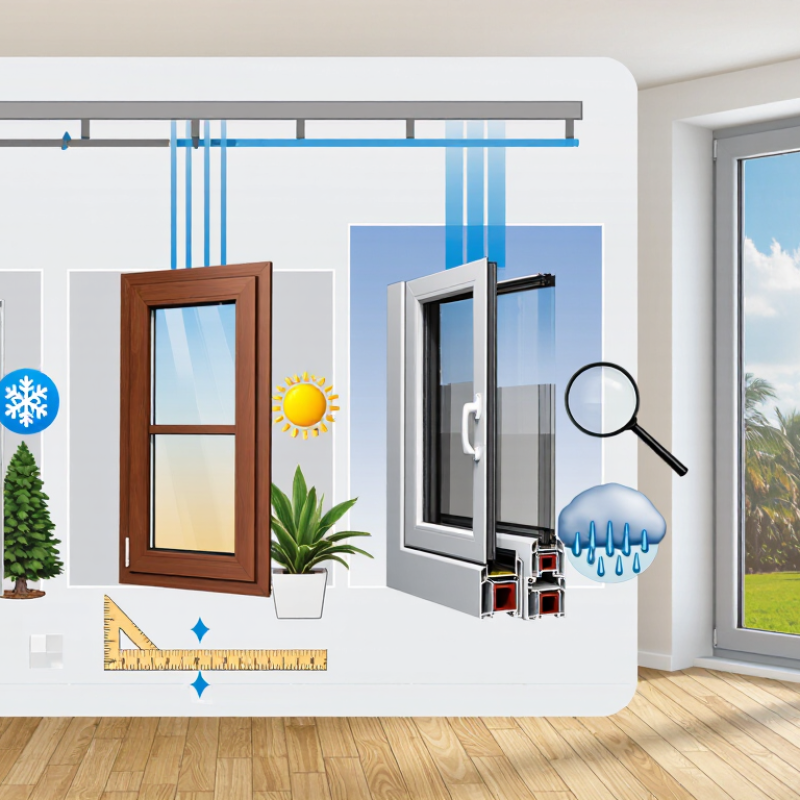
Before comparing frame materials, define the job each window must perform. Do you need quiet bedrooms, stronger ventilation, child-safe opening limits, or emergency escape access? Measure every opening, including width, height, wall depth, and sill condition. Record the room’s direction and nearby shade.
Climate changes the specification. Hot regions usually benefit from lower solar heat gain, exterior shading, and durable seals. Cold regions need low U-factors and carefully controlled air leakage. Mixed climates require a more balanced choice. Ask for independently tested U-factor, solar heat gain coefficient, visible transmittance, and air-leakage results.
Still, climate labels can mislead. Coastal salt, mountain sunlight, humidity, and local wind exposure may matter more than a country’s average temperature.
Home style should guide proportions, sightlines, and opening patterns, not dictate performance. A narrow, divided-light window may suit a traditional façade, while larger clear glazing can support a modern interior. Check local installation requirements and request test methods from the supplier.
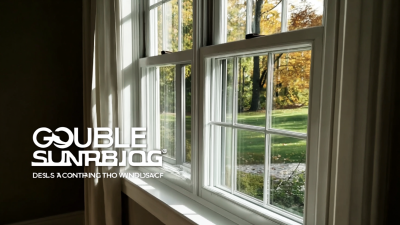
When buying windows across borders, compare materials before comparing prices. In renovation projects, I have seen vinyl, aluminum, wood, and composite frames behave differently under heat, rain, and salt air. Vinyl usually needs little maintenance and insulates well, but intense sunlight can expose weaknesses in low-quality profiles. Aluminum offers slim sightlines and strength, though it needs thermal breaks to reduce heat transfer. Wood feels warm and repairs well, yet it demands regular sealing in humid climates. No material wins everywhere.
Glass selection can change comfort more than frame color. Double glazing suits many climates, while triple glazing may help in severe cold or noisy urban areas. Low-emissivity coatings reduce heat flow, while laminated glass improves sound control and impact resistance. Ask for visible light transmission, solar heat gain, and U-value data, not vague claims. These figures need local interpretation. A low U-value is useful in cold regions, but solar gain matters in hot regions. Check whether ratings follow a recognized testing standard and match the installed window, not only the glass sample.
Installation deserves equal attention. A well-rated window can perform poorly when the opening is uneven or the seal is incomplete. Request details about spacers, drainage paths, warranties, and replacement procedures. For coastal homes, inspect corrosion protection; for high-altitude sites, confirm pressure performance. I once trusted a strong rating without checking installation quality. That was a costly reminder. Compare certified documents, climate conditions, and long-term maintenance before signing.
| No. | Buying Tip | Dimension to Compare | Typical Data or Benchmark | What It Means | Recommended Buyer Action |
|---|---|---|---|---|---|
| 1 | Choose the frame material for the climate | Frame type, thermal conductivity, maintenance |
Vinyl/PVC: low maintenance and naturally insulating. Wood: good insulation but requires moisture protection. Thermally broken aluminum: durable; thermal break is essential. Fiberglass/composite: stable, low maintenance, and well insulated. |
Frame design strongly affects heat transfer, durability, and long-term maintenance. | For hot or cold climates, request the complete window U-factor rather than judging the frame alone. |
| 2 | Compare single, double, and triple glazing | Number of panes and cavity configuration |
Single clear glass: approximately 5.5–6.0 W/m²·K. Double low-emissivity glass: approximately 1.4–1.8 W/m²·K. Triple low-emissivity glass: approximately 0.7–1.0 W/m²·K. Values are typical center-of-glass ranges. |
Lower glass U-factor generally means less conductive heat loss or heat gain. | Use double glazing in moderate climates and consider triple glazing for very cold climates, subject to cost and wall design. |
| 3 | Check the low-emissivity coating | Low-E coating location and solar-control level |
Low-E coatings can reduce infrared heat transfer. Typical double-glazed Low-E units may achieve a center-of-glass U-factor of about 1.4–1.8 W/m²·K. Solar-control Low-E glass commonly has SHGC values around 0.25–0.45. |
The coating can improve insulation while controlling solar heat, but excessive solar control may reduce useful winter heat. | Select higher solar gain for cold climates and shaded elevations; select lower solar gain for hot, sunny elevations. |
| 4 | Use U-factor to compare insulation | Whole-window U-factor |
Typical whole-window values: Basic double-glazed window: about 1.8–2.5 W/m²·K. High-performance double-glazed window: about 1.2–1.8 W/m²·K. High-performance triple-glazed window: about 0.7–1.2 W/m²·K. |
A lower U-factor indicates better resistance to heat flow. Whole-window figures include the frame and edge effects. | Compare certified whole-window values in the same unit system; do not compare center-of-glass data with whole-window data. |
| 5 | Match the Solar Heat Gain Coefficient to orientation | SHGC, climate, and window orientation |
SHGC ranges from 0 to 1. Clear double glazing: commonly about 0.60–0.75. Solar-control glazing: commonly about 0.25–0.45. Lower values admit less solar heat. |
SHGC measures the fraction of incident solar radiation entering through the window. | Use lower SHGC for hot climates and strongly sun-exposed windows; avoid choosing one SHGC for every elevation without a climate assessment. |
| 6 | Review visible light transmission | Visible Transmittance, or VT |
VT ranges from 0 to 1. Clear glass: often about 0.70–0.80. Coated or tinted glass: often about 0.40–0.70. Higher VT generally provides more daylight. |
VT indicates how much visible light passes through the glazing. | Balance daylight, glare control, privacy, and solar performance instead of selecting the lowest SHGC alone. |
| 7 | Select the correct safety glass | Tempered glass, laminated glass, and local safety rules |
Tempered glass: heat-treated and breaks into relatively small granules. Laminated glass: contains an interlayer that helps retain fragments after breakage and can improve acoustic performance. Safety glazing is commonly required near doors, low-level glazing, and wet areas. |
The appropriate glass reduces injury risk and may improve security or noise control. | Check the building code of the installation country and specify safety glazing where required. |
| 8 | Inspect air leakage and weather resistance | Air leakage, water penetration, and wind-load rating |
Air leakage is often reported in m³/h·m² at a specified pressure, such as 75 Pa. Lower air leakage is better; high-performance products may be around 0.3–1.5 m³/h·m², depending on the test method and product class. Wind and water ratings vary by regional standard. |
Poor sealing can increase drafts, moisture intrusion, noise, and energy use. | Request test reports using the applicable local or international standard and confirm the design pressure for the building location. |
| 9 | Consider the spacer and gas fill | Spacer type, cavity width, and insulating gas |
Warm-edge spacers generally reduce edge heat transfer compared with highly conductive metal spacers. Argon-filled insulating-glass units are common; krypton can provide stronger insulation in narrower cavities but usually costs more. Gas-fill performance depends on sealing quality and cavity design. |
The edge spacer and cavity influence condensation risk and the overall thermal performance of the glass unit. | Ask for the spacer material, gas-fill specification, and warranty for insulating-glass seal failure. |
| 10 | Verify installation, sizing, and regional compliance | Rough-opening size, drainage, installation method, and certification |
A correctly installed window should include a compatible sill pan or drainage path, perimeter air sealing, weather-resistant flashing, and movement allowances. Product labels and test reports may use different standards, such as ISO, EN, ASTM, or national building codes. |
Even a high-performing window can leak or lose efficiency if it is incorrectly measured or installed. | Confirm metric or imperial dimensions, local code requirements, installation responsibility, replacement-parts availability, and warranty terms before ordering. |
Note: The numerical ranges are indicative industry values for comparison only. Actual performance depends on window size, frame geometry, glazing configuration, climate, test standard, installation quality, and local building requirements.
Buying windows across borders requires more than comparing glass and frame prices. Measure each opening at three points: top, middle, and bottom. Record width, height, and diagonal differences. Use the smallest width and height, then confirm the installer’s required clearance. The first measurement is often wrong. Uneven masonry, old plaster, and sloped sills can change the final size. Photograph every opening before ordering, including drainage paths and nearby structural supports.
Building codes must guide the selection. Requirements may cover wind pressure, water penetration, thermal performance, safety glazing, ventilation, and emergency escape openings. The International Energy Conservation Code provides regional efficiency criteria, but local authorities may apply stricter rules. Check the window’s U-factor and solar heat gain coefficient. The U.S. Department of Energy reports that windows can account for 25–30% of residential heating and cooling energy use. Small specification errors can become expensive comfort problems.
Installation deserves equal attention. The frame needs correct shimming, level alignment, perimeter sealing, and exterior flashing. Follow the project’s code requirements and the window manufacturer’s tested installation method. The National Fenestration Rating Council explains that performance ratings depend on standardized testing, not appearance alone. Ask for test reports, product drawings, and approved fixing details before payment. International projects can also face different wall thicknesses and drainage practices. A perfect window can still leak when the opening preparation is careless. That detail is easy to underestimate.
Check measurements, building codes, energy performance, glazing, frame materials, drainage, installation requirements, warranties, delivery conditions, and local climate suitability.
The chart compares common nominal window sizes. Areas are calculated from the listed width and height: square feet = width × height ÷ 144. Nominal sizes are planning references only; measure the actual rough opening and confirm local building-code, egress, safety-glazing, energy, and installation requirements before ordering.
Buying home windows across borders requires more than comparing online prices. Ask each manufacturer for its factory location, production capacity, test reports, and export experience. Request a physical sample or detailed section drawing before placing a large order. A sample reveals frame stiffness, gasket fit, drainage holes, and hardware quality. I have seen attractive quotations hide thin profiles or unclear glass specifications. Do not rely on photographs alone. Check whether the manufacturer can produce your required dimensions, glazing, colors, and opening styles consistently. Independent test documents should show standards, test dates, and product scope.
Read warranty language line by line. Confirm coverage for frames, glass seals, finishes, hardware, and installation-related defects. Ask who pays freight when replacement parts cross a border. A ten-year warranty may exclude coastal corrosion, accidental damage, or improper installation. That matters. Get exclusions in writing. Also ask for a claim procedure, response time, and spare-part availability. A reliable supplier should provide installation guidance, packing photos, and a named service contact. Still, even good suppliers can make mistakes. Measure openings twice, because one wrong dimension can erase any savings.
Compare landed cost, not unit price.
Include packaging, inland transport, insurance, duties, taxes, testing, and local labor. Ask for a clear invoice with payment milestones and product tolerances. Check references from recent international buyers, then verify them independently. A factory video call can reveal quality checks, but it cannot prove everything. Start with a controlled trial order when possible. Record defects, delivery dates, and communication gaps. That evidence may show whether the supplier is dependable enough for a larger project.
Plan carefully. For global buyers, window performance matters as much as appearance. The U.S. Department of Energy estimates that windows cause 25–30% of residential heating and cooling energy use. Start by recording opening sizes, wall thickness, climate, and local ventilation needs. Request complete specifications, including U-factor, solar heat gain coefficient, visible transmittance, and air leakage. The National Fenestration Rating Council explains that these ratings help compare window performance consistently. A low price can hide poor thermal results.
Delivery needs its own checklist. Confirm packaging, container dimensions, insurance responsibilities, customs documents, and replacement procedures before payment. Ask for drawings showing glass thickness, frame dimensions, and hardware positions. A damaged corner may appear minor but can create water entry months later. Keep spare seals and installation instructions on site. Installation should follow local building requirements and the supplier’s tested method. Even an efficient window can underperform when the frame is twisted or the flashing is incomplete.
Maintenance is often forgotten. Inspect seals, drainage holes, locks, and exterior joints twice yearly. Clean tracks before they collect sand or salt. The IEA’s 2023 buildings report states that buildings use about 30% of global final energy, so small efficiency losses deserve attention. I would also allow a contingency budget; delivery dates and site conditions rarely behave perfectly. A beautiful quote is not a complete plan.
Call us at (516) 858-2492
for a free estimate or simply click the button below: